Decoding Human Behaviour with the Leary Circumplex
Dec 01, 2025Understanding Human Behaviour Through the Leary Circumplex
Many people go through conversations reacting to tone, posture, or phrasing without understanding what drives those reactions. Behaviour often feels unpredictable, but it is not. It follows patterns. The Leary Circumplex is a model that helps us see those patterns clearly.
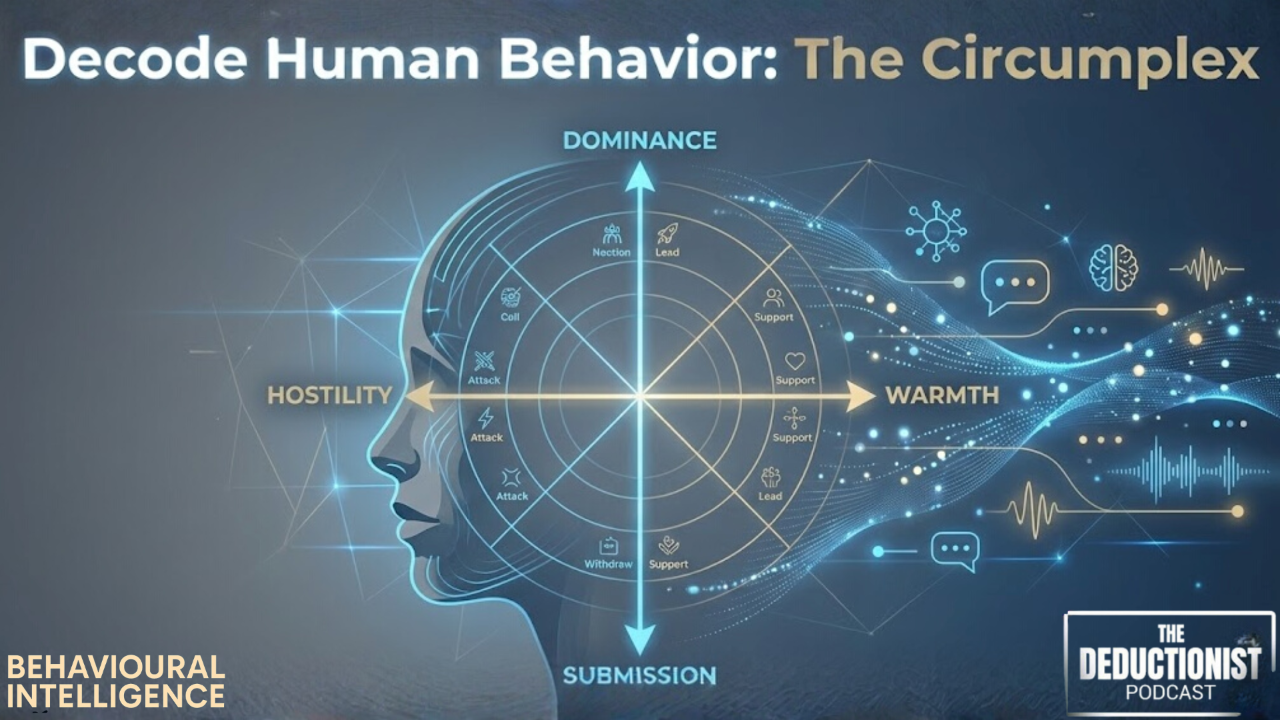
Originally developed by psychologist Timothy Leary, the Circumplex is a framework for observing and interpreting human behaviour during interactions. It is built around two axes: dominance versus submission, and warmth versus hostility. These axes create a map of behavioural positioning that can be applied to real conversations.
Why the Circumplex Matters
In conversation, people do not act in isolation. Each gesture, word, or decision influences the other person’s response. The Circumplex helps us understand what kind of response we are likely to receive based on how we position ourselves. Speak from a dominant and warm place, and you may encourage cooperation. Respond from a hostile and submissive position, and you may invite challenge or shutdown.
This model is used in fields such as negotiation, interrogation, coaching, and leadership. It helps people recognise interactional patterns, adjust their own positioning, and respond to others with more clarity and control.
What We Covered in the Podcast
In this episode, we discussed:
- The origins of the Leary Circumplex and its structure
- How behaviour shifts during conversation in response to subtle cues
- Techniques for identifying behavioural positions in real time
- Practical uses of the model in professional and personal settings
The Circumplex does not label people. It offers a dynamic view of how behaviour moves within and between conversations. Once you learn to observe this, your ability to manage interactions improves significantly.
Conclusion
Behavioural awareness is a skill that can be developed. The Leary Circumplex gives you a practical way to begin that process. By understanding your own positioning, and recognising others’, you can respond with greater precision and reduce misunderstandings.
You can listen to the full episode here: Click Here
If you would like to explore these ideas further, or apply them in your own work, feel free to get in touch or join the next RLS training cohort.
Don't be strangers.
Ben
